



In case it’s not clear, I love superpowers and magic. I don’t think I’ve ever written anything that didn’t involve supernatural powers at least to some extent. So, I’m using this post as an opportunity to share some lesser-known, underrated superpowers that we don’t see too much in media. That means no telekinesis, no super strength or super speed, no controlling the elements, none of that. We’re only talking about abilities that are decently obscure, appear only occasionally, or are just random abilities that could be fun to include in a story.
Let’s begin.
Memory Manipulation

What Is It?
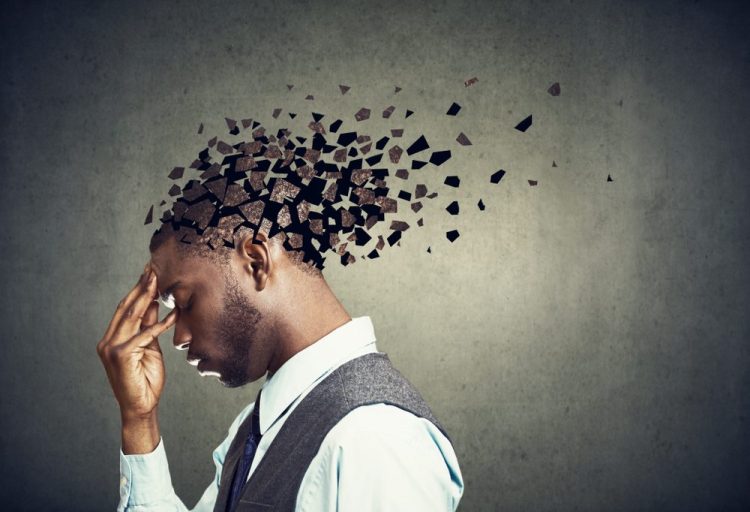
Memory manipulation allows the user to erase, change, or plant a person’s memories. Had an embarrassing moment in class? Make everyone forget about it. Got in trouble with the law? Too bad the witnesses don’t remember what you look like…or even that they saw the crime take place. Fumbled a presentation at work? Now the entire office remembers how you blew the boss’s socks off with your groundbreaking ideas and flawless execution.
Why Isn’t It Used?
While I feel like this is an underused ability, I also understand why it’s underused. You basically have a deus ex machina that you can use at any moment if you can make someone remember (or forget) things exactly how you want them to. Got yourself stuck dealing with a villain who’s holding a grudge against you for some botched heroics in the past? What botched heroics? Being hunted down by a shady government entity? Oops, now they have no idea who you are anymore. Accidentally exposed a big secret you’ve been keeping from the person you love in order to protect them? Ha ha, no you didn’t!
It goes without saying that there’s a lot a user can get away with having this ability and it can easily turn into a superpower that prevents any conflict or creates a huge plot hole if the user doesn’t, well, use it.
Use It, Don’t Abuse It!
In storytelling, I think the best way to rectify this little issue—and most “overpowered ability” type issues—would be to scale down the user’s capabilities or scale up their antagonist’s. Maybe the primary antagonist is someone who has telepathic capabilities superior to the user and can’t have their memory altered or erased. Maybe the user can only alter someone’s memories temporarily, and after a certain point, those memories are completely restored, making it only useful for a certain period of time. Maybe the ability is limited to only one or a few people at a time, making an entire shady government entity that knows what you can do much harder to manage than if you could just wipe all their memories in one fell swoop. Maybe you can even just keep it simple and make it so that the user hurts or drains themself when they use this ability too often. It might be a cliche solution, but it works for a reason.
I’ve been watching Season Two of Legacies, the spin-off of The Vampire Diaries where all the witches, werewolves, vampires, and various other magical creatures can live in (relative) harmony at the Salvatore School for the Young and Gifted. Only issue is that they still have to keep their true nature hidden from the human world, which is where the vampires’ ability to alter people’s memory comes in handy. The nice thing about how this ability is used, though, is that it doesn’t suddenly make the fear of exposure a non-issue. The vamps (at least in this show. I’ve never seen TVD or The Originals) only appear to be able to use this ability on one person at a time, and that wouldn’t stop the whole world from learning the truth about them if they were ever to encounter some sort of mass exposure event like being filmed on live TV. It makes the ability useful, but not a cheap cop out that gets the good guys out of trouble all the time. And because most (if not all) vampires are capable of it, that also means it can be turned against the protagonists too.
Talking to Objects


What Is It?
Self-explanatory. You have the ability to communicate with objects.
Why Isn’t It Used?
Being able to talk to objects has some horrifying implications. If you can talk to them, are they sentient? And if they are sentient, does that mean that our treatment of literally every object we use, destroy, throw away, etc, is horrendously cruel and barbaric? If we suddenly come to realize that everything in the world, living or otherwise, can think and feel, well, that just sucks for everyone involved, doesn’t it?
Use It, Don’t Abuse It!
The best way I can think of to fix this would be to ask yourself how it’s possible to communicate with objects. Maybe the user isn’t technically just talking to random sentient items, but spirits all around them that possess different objects now and then, and for whatever reason, just can’t possess animals or people. Or maybe there’s such a thing as spirits bound to particular objects, like a “stapler spirit” or a “water bottle spirit.” Maybe the destruction of the item they’re bound to doesn’t result in a horrible death, but just forces Mr. Stapler Spirit to bind himself to another lonely stapler in some office or classroom elsewhere.
Or maybe the object is like Siri, where you can ask it questions, but that doesn’t mean it’s sentient. The object only responds the way it’s able to respond: a random book can tell you the contents of itself, a computer can tell you its parameters, a plant can tell you what it needs to survive, and so on. That would be more than enough to nerf the ability without making it entirely useless, because you can still get small tidbits of knowledge from communicating with the objects, even if they’re not the most useful tidbits most of the time. It also forces the protagonist to get creative, and a protagonist who can get creative with their powers is one we can root for much more easily than one that can just make things happen with their epic god powers.
…Although I do find epic god powers to be pretty fun too.
Convenience Conjuring


What Is It?
Conjure the exact object you need when you need it.
Why Isn’t It Used?
It’s another deus ex machina if done wrong. In fact, it literally exists to be a deus ex machina, so it would be very impressive if a writer could make this work in an interesting way that doesn’t turn the user into a Mary Sue/Gary Stu.
Use It, Don’t Abuse It!
Fortunately, the solution for this one is pretty simple. Limit what exactly can be “conveniently conjured.” In my favorite DND vodcast, Dimension 20, Fantasy High, one of the player characters receives a magic jacket as a gift that allows her to produce useful items from it. However, if she requests to produce a living thing from the jacket, that thing will be cursed to live a half-life and immediately try to kill itself. It is also limited to conjuring things only up to a certain value at a time (the Wiki says 10GP is the limit, so I’m going with that).
Obviously, it’s up to you what a power like this can do. Maybe your protagonist can conjure anything they need at a moment’s notice, but what their power determines they need might differ from what the user determines they need, which can cause all kinds of shenanigans if the two forces aren’t in sync. Hell, maybe you can make the power a sentient pain in the ass that thinks it knows better than the user, and the user has to train it to stop mansplaining (powersplaining?) conflict solutions to them and condescendingly conjuring objects that the user didn’t ask for.
Book Manipulation


What Is It?
It’s pretty much whatever you want it to be, as long as books are involved. Maybe you have some sort of telekinetic power over books, or maybe you’re able to write with your mind or build giant book golems. Maybe you can read a book instantly just by touching it or enter the setting of a book, Fairly Oddparents style. If you wanted to go absolutely nuts, you could even make the user capable of manifesting anything he/she writes in a book. Did you write a book about how dragons are real and everyone has magic? Great, open that book and enjoy your new fantasy lifestyle.
The 2019 movie Scary Stories To Tell In The Dark (an adaptation of the classic horror books of the same name) had a fun take on this: the ghost of Sarah Bellows, an abused young girl whose story was never told and who died unavenged, writes in her haunted notebook, targeting the protagonists and making each horror short story she features them in a reality. This results in a lot of the usual horror shenanigans: gruesomely turning teen boys into scarecrows, enveloping them in an evil hug of death that transports them God knows where, getting them harassed by gangly monsters with missing toes, pretty standard stuff.
Why Isn’t It Used?
It kind of is, but it’s not really an established power in the way that flight, super strength, telekinesis, etc, are. If anything, it’s considered more of a sub-power of telepathy/telekinesis than anything else. But I think it could be so much more!
Of course, it’s always important to be cognizant of the powers you give certain characters so you don’t end up writing yourself into a corner, which is why a power like the one used in Scary Stories To Tell In The Dark can be tricky if you give it to the protagonist. After all, if your character can simply take out a notebook and literally take over the story, you don’t have a lot to work with in terms of conflict.
Use It, Don’t Abuse It!
There are a couple of ways you can go about using this power: either you use the “lesser” versions of this power, which would be telekinetic power over books, building book constructs, being able to absorb the contents of a book instantly, etc, etc.
But if you’re thinking, “Man, those really OP powers like entering book settings, manifesting objects in books into reality, and changing the whole narrative by writing in a notebook all sound way more fun to write about,” fear not! The thing fantasy and sci-fi writers always have to contend with the most is either limiting the protagonist’s power so that it’s not OP, providing ample hurdles so that even OP power isn’t enough to make the story boring, or throw a villain in the protagonist’s way who is even more powerful, thereby scaling up everyone’s power. Think Dragon Ball Z. I’ve never seen it, but I do frequently hear about the power scaling up over and over again. The characters are probably gods by this point in the show.
So, for example, maybe the protagonist can bring items in books into reality, but it’s a huge energy drain or there’s a chance of doing it wrong and causing some sort of time/space catastrophe depending on the object they try to manifest.
Maybe the protagonist can narrate the events of the story, but only with a particular special notebook that—gasp—has been stolen from them at the start of the story. Or maybe you can go the Scary Stories To Tell In The Dark route: the antagonist is the one with that super OP power. It’s another use of the ability that requires the protagonist to get creative in order to overcome it. And you gotta love a protagonist who has to work for their happy ending.
And that’s that! There are many, many more abilities that it wouldn’t hurt to see featured in media more often. Maybe I could make a series out of it. I could even get some writers to collaborate and sort of “weigh in” on a power that they love and wish they could see featured more often.
Hint, hint.