
 By Tennyson E. Stead
If there is a more clichéd complaint about the film development process than “the book is always better than the movie,” I don’t know it. Even the most consistently drunk, most anticultural aunt or uncle will trot that hoary observation out at dinner, about this or that awards-season movie, when social convention forces you to break bread with them over the holidays. Maddeningly, they’re almost always right. Despite the increasing pressure to adapt content faithfully to the source material, and despite the detailed fan service that filmmakers are putting forth in their efforts these days, page-to-screen adaptations wind up feeling hollow – almost as if they’re just an advertisement for the book, or the comic, or the video game that necessitated their production.
In the end, we ascribe these failures to the director’s command of tone. Something was off? TONE. Had to be the lens package, the color correction, and the timber in the voices of the actors. Maybe they were acting too hard. Maybe they weren’t acting hard enough.
Writers, it’s not the tone. It’s not the director. It’s not the cast. Hold onto your teacups, dear colleagues – because it’s the screenwriters who are fueling Auntie Winifred’s annoyingly unassailable diatribes about how Hollywood ruins everything.
Systemically, there are differences between how we write for a reader and how we write for actors. Overlooking these differences is easy to do, when leveraging the narrative strength of your source material is the whole point of adapting a story to film. Understanding these differences can help ensure that we write great literature, that we write great screenplays, and that we move our stories from one medium to the other gracefully and well.
Great literature is all about making observations. By putting a character in a situation they’re not equipped for, we strip them down and reveal them to the reader. By connecting those observations with thematic threads, we weave a narrative. By juxtaposing those themes against one another, we create tension. If our character is wrestling with their sense of duty, but also with their need to explore their own happiness and potential, then the reader knows the forces at work on our protagonist cannot coexist. Reading is the only way to see how that imbalance gets resolved, so they keep turning pages.
Journalism works the same way. So, in fact, does stand-up comedy. Writing, at its core, is about making artful and engaging observations.
In a movie theater, nobody wants our observations.
While this seems like a semantic argument, consider that people come to WATCH a movie, or a television show, or a play. In the most literal sense, they want to make their own observations. If we’re making those observations for them, and more or less just presenting them in a pretty package, then we’re not inviting them to watch. We’re inviting them to “see.”
On a fundamental level, literary structure actually betrays the most engaging aspect of going to the movies. Respecting the source material is the beginning, and not the end, of adapting a story to film.
So, what do people watch? Great stories on the stage and screen are made from the efforts of our characters to achieve goals that are, on some level, overwhelmingly challenging. When a person is doing something they have no business doing, people watch them. Actors perform actions because it’s the efforts of a character to achieve their respective goal that draws the audience in.
What screenwriters miss in their literary adaptations is the difference between action and reaction. When an actor is doing everything they can, using all their commitment, to do something they just don’t have the tools to do? That effort draws us in. When an actor is reacting, it feels like they’re selling something. Using things like emotion and tone to make a story feel credible isn’t acting. Technically, it’s modeling. Reactive characters feel like they’re selling something because, structurally, they are literally selling the writer’s work to the audience.

For me, it helps to think of the relationship between an actor and an audience as an extension of “The Bystander Effect.” When an actor is doing something with a lot of commitment, even if what they’re doing is contemptible, they are humanized through their efforts. Instinctively, the audience will attach to them. When a character is having something done to them, even if we exhaust every possible effort to paint that character as sympathetic, the audience will dehumanize and hate them.
Why do we love bandits and con artists? Why do we hate victims in horror movies? To leverage the Bystander Effect, our characters don’t necessarily have to be terrible people. Just make sure the characters are driving the story, rather than letting the story drive the characters.
In the hands of an actor, everything flows from that character’s efforts to achieve their goal. When characters are in conflict, it’s because their goals are forcing them to try and use the same resources in some way. When a character has an arc, it’s because they lack the things they need to achieve their goal. Only by forcing themselves to change can they succeed.
Catharsis is for novelists. In film and television, our characters change themselves in order to become the person who can actually succeed at whatever they set out to do. If we subject our characters to transformative forces as writers, then our character is just reacting and we lose the audience.
Why do you think there are no Oscar-winning asteroid movies? Because the moment an asteroid starts heading for Earth, everyone stops what they’re doing and reacts! Our job is to let our characters create their own story, rather than trapping them in a story they need to escape from.
If all this is true, how in the world is anyone ever supposed to adapt a book to the screen?
Really, there’s two ways I’ve found that work for me. I’ve got a “macro” approach and a “micro” approach to adapting stories to film. Which approach I use depends more than anything on the scope of the movie that my clients are trying to make.
If the filmmakers are committed to showcasing the full scope of the novel (or whatever the source material happens to be), then I take a step back and consider the arc of the protagonist. Who do they become by the end of the story?
Now, to what degree does the source material support the idea that it’s the protagonist’s fault that they became this person? What evidence is there in the source material, that they did this to themselves? What if all the bad things that happened were situations they put themselves in, intentionally or unintentionally, in order to achieve some kind of goal? What might that goal have been?
Basically, I’m putting the story through an X-ray machine to see if there’s a spine of action that holds it all together, even if the author themself never noticed it before. If there’s an action by which the protagonist can be said to drive their own story, then the movie’s job is to tell the story of how they did that thing. On the surface, it’ll seem like the same story. Many of the same events will be captured on the screen that were there in the book, and their relevance to the movie will depend on the degree to which the protagonist instigated them, or forced them to happen, in the pursuit of their mission.
Most of my adaptations wind up taking this approach.
If there doesn’t seem to be an overarching action, or if the filmmaker is looking to make a movie with a more intimate scope than the novel, the adaptive process actually gets easier. What’s the most important thing the protagonist ever did? How did they do it? There’s your story!
Consider Long Walk to Freedom as a piece of source material. Movies have been made about the life and times of Nelson Mandela. Despite the intense drama inherent to his life story, none of those films are as engaging as his autobiography. Why the hell is that?
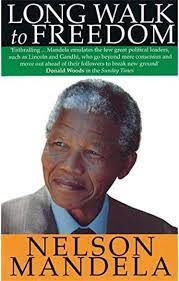
When he tells the story of his life, he explains what happened to him and how he survived and prevailed. When the South African government threw him in prison, he went to work and became an activist. From that work, he developed a new body of leadership for the nation of South Africa.
In a novel, all that reaction serves to reveal his character. In a performance, it makes the story about the government that locked him up. If they created him, if the pressures they heaped on him made him into the leader we all admire, then he’s really just a passenger in his own story.
Still, that’s the story he wrote! What can a filmmaker do?
Dig. Consider this man’s arc, and what he did to become the man he eventually became. Did the story of his efforts to change his country really begin when he was thrown in prison?
When Nelson Mandela was thrown in prison, it was for representing Black families in the courts of South Africa. In the 1940’s, under Apartheid, this man went to law school. Why? Was he just trying to find a decent paycheck, until the government pushed him too far and forced his hand? No! Of course not! Under that kind of oppression, you have to keep your head down! Nelson studied law because he wanted to effect change. When they threw him in prison, it was because he was winning cases.
In that sense, Nelson forced the courts to make him disappear. When Nelson Mandela stepped on the plans of men in power, they moved him out of the way and continued on with their respective missions. For his own part, he refused to let that be the end of his work. Instead of quitting, he found new tools to achieve the same goals. To keep his own mission moving forward, Nelson had to escalate his efforts. For an actor, that’s how conflict works.
Technically, both versions of this story are true. Yes, Nelson Mandela was a victim of the South African justice system. Just as surely, he was a revolutionary who forced the South African government to conform to his agenda – and even if he had to figure out how to do that “on the fly,” he never stopped moving towards his goal.
Just because these stories are equally true does not mean that they are equally cinematic. If we watch the movie about how Nelson Mandela got thrown in prison, we feel like we’re being asked to sympathize with him. If we watch the movie about how he broke the South African court system, and then the government itself, we start wondering whether maybe we can’t do the same exact thing. Watching that movie makes us feel empowered, and scared, and humbled, and enriched.
Our job, really, is to bring the story and the characters of that book to life for the audience. To do that, we need to find the action that defines the story. What hurts us about this work, as writers, is that our observations – and the observations made by the author of the source material – cease to be the driving force of the narrative. Most of the time, those observations disappear into the subtext entirely…
…but we’re not here to be heard. We’re not even here to make sure the author of the source material gets heard. That writer, whoever they are, already has their platform. Our job is to give the actors the tools they need to deliver amazing performances. Let every actor perform an action that demands the highest commitment and specificity from them, and never ask them to sell anything at the expense of that action. Do that, and even in your rehearsals, you’ll start to see the magic of cinema.
