
 By The Angry Noodle
I decided to dig up some info on a couple of evil corporations and present some of their, ahem, alleged activities, assigning them their very own dystopian corporations in fiction that they fit best.
It’s like presenting them an award at an award show, except the award is shame.
Disclaimer: There is no ethical consumption under capitalism. I’m not here to give you grief for patronizing any of these companies. I have used several of them myself, and part of the insidiousness of these massive corporations is that lack of income and/or accessibility and the monopolization of entire industries means that there often aren’t many options for alternatives.
This is not judgment; we are all just existing in this system and doing the best we can.
And hey, maybe you dystopian/post-apocalyptic or sci-fi writers can get some writing inspiration in the process.
Other Disclaimer: Tons of companies worldwide could make it on this list. I have a list of many others that I’m preparing notes to write about, and these are not presented in any particular order, so don’t worry if an evil company you thought of didn’t appear this time. There are plenty more opportunities to write plenty more posts just like this.
Hooray…?
Other, Other Disclaimer: I’m linking the relevant articles for each company’s fun little scandals, but allegations are allegations, take everything with a grain of salt, blah blah, and don’t sue me for libel or whatever.
Final Disclaimer: There will be some spoilers sprinkled throughout the piece, so I recommend checking the media mentioned and making sure you are cool with being spoiled before proceeding.
(This post was voted on by beloved Pasta Patrons. Special thanks to them for helping my silly brain meat make decisions!)
Let’s begin.
Walmart
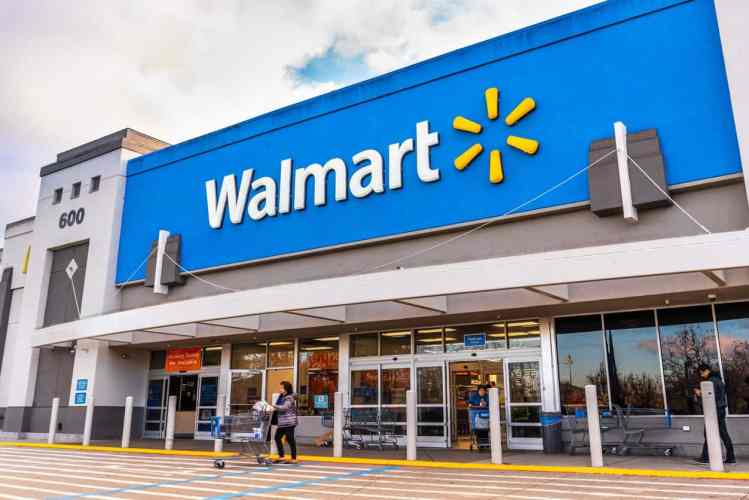
Founded in 1962, Walmart Inc. is a chain of American grocery stores known for its (relatively) cheap prices, its massive presence across the country, its vehemently anti-union stance, poor wages, poor management, and abhorrent treatment of employees. Some lawsuits that the corporation has had to pay up most for include labor and wage violations, several cases of employee discrimination, violating the Foreign Corrupt Policies Act (specifically because their internal accounting controls were aware of bribery of foreign officials by third-party intermediaries to expedite the opening of stores and the acquisition of appropriate permits and licenses, and failed to take the necessary steps to avoid corruption), and—biggest of all at a whooping $3 billion—contributing to the opioid crisis by “failing to appropriately oversee the dispensing of opioids at its stores.”
This is to say nothing of the fact that Walmart stores are notorious for destroying small businesses within the communities they are built in or nearby, creating a reliance on the retail giant at the expense of small, significantly less rich and powerful mom-and-pop shops.
WALL-E: Buy n’ Large Corporation

In Disney Pixar’s Wall-E, Buy n’ Large Corporation is an evil corporation that claimed a monopoly on essentially every industry in the world. Started initially as a yogurt company, it branched out into selling a wide range of products, becoming a massive conglomerate that crushed or acquired any local competition. This massive corporate control eventually turned into political control as well, leading to a growing fixation on consumerism worldwide that trashed the planet and resulted in the corporation fleeing into space on the Axiom, along with whatever remained of humanity.
(Update August 2025: In retrospect, this one might have fit Amazon better than Walmart. I suppose it still applies to both, but I did want to acknowledge that it does sound eerily similar to Amazon. A lot of it applies to Walmart as well, however, and I already have several examples for Amazon and not as many for Walmart, so…
¯(ツ)/¯)
SCP Foundation: SCP-4703 (“Yeah, We’re Totally Going to Sell You This”)

SCP-4703 is a delightful and—in my opinion—underrated SCP: a massive superstore that is cosmically above the very concept of legality and is therefore not held to the usual standards of laws and regulations. As a result, Yeah, We’re Totally Going to Sell You This is a labyrinthine facsimile of a supermarket, complete with dangerous traps and murderous lions (which are perfectly legal, thank you very much).
Oil companies (all of them, but special shoutout to BP, Armaco, Shell, Chevron, Exxon, and Gazprom)
Exxon Mobil is known for denying climate change, having conducted studies that have made clear the catastrophic ramifications of the use of fossil fuels on the planet. Rather than acknowledge the research of their own scientists and use this information to reduce their ever-growing impact on the environment, they instead opted to lobby Congress in an effort to “undermine regulations to reduce greenhouse gases.”
Exxon knew as early as the 70s and 80s the damage that climate change could cause and chose to decry its own science to protect the bottom line. Add to that the massive profit gas and oil companies stand to make from the demand that comes during times of war, a great example being the conflict in Ukraine in 2022, in which ExxonMobil, Chevron, and Shell all broke earnings records. Basically, if there’s lots of death, human suffering, and destruction of the environment involved, it’s safe to assume these companies are making a healthy chunk of change off of it.
Final Fantasy XII: Shinra Electric Power Company

Serving as the primary antagonist of Final Fantasy XII, the Shinra Electric Power Company runs the world of Gaia. Having started as a weapons manufacturer (and we all know how pleasant and beneficial to humanity those are), they are the sole source of power in the world, and they make sure to capitalize on this monopoly. They’ve even got their own military and propaganda arm to ensure that any pushback they receive is swiftly and ruthlessly crushed.
Underwater: Tian Industries
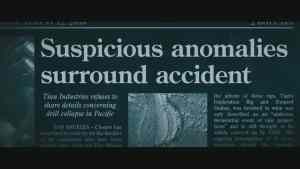
Underwater is a 2020 sci-fi film about a crew working for Tian Industries, a deep-sea drilling corporation. At the bottom of the ocean, they encounter eldritch underwater monsters that attack them. The monsters wipe out most of the crew, yet in the end, Tian “denies access to employees for interviews,” “declines government help in search and rescue,” “refuses to share details concerning drill collapse in the Pacific,” destroys surveillance footage of the incident, and expands its drilling efforts despite the clear danger involved in doing so. The prioritization of profit over the health and well-being of not only their own staff, but all of humanity, is quite a familiar tale.
Avatar: RDA Corporation

If you’ve seen Avatar, then you might remember the RDA Corporation, the weapons and vehicle manufacturer with tons of power and none of those pesky morals. According to the Wiki, they were given monopoly rights to anything mined from Pandora, polluting the environment with their military bases scattered across the planet, chopping down trees, killing off wildlife, sparking a war with the native Na’Vi, and even attacking the central Omatikayan Hometree, all to mine the hilariously named unobtanium that would score them a nice profit.
I have my thoughts on this series, and I have no plans to watch the follow-up films, but I’ll at least give James Cameron credit—he knows how to make an evil, planet-ruining megacorporation.
Amazon

Founded as an online bookseller by Jeff Bezos in 1995, Amazon is now, well, everything. If you’re looking for a product, chances are pretty good you’ll find it on Amazon. And with their brutal treatment of employees, who have famously spoken out about some of them needing to pee in bottles because their quotas don’t give them enough time or breaks to use the bathroom, you can get anything delivered pretty quickly, so long as you can pay. It’s an undeniably super fast and convenient service, one that millions around the world have come to rely on. The problem is, like Walmart, it’s been taking over the retail space, and there are few other places left to go.
The Federal Trade Commission got busy this year suing Amazon over its monopoly and relentless control over potential competition, specifically for its “exclusionary conduct that prevents current competitors from growing and new competitors from emerging.” I say “potential” competition because anything with even slightest chance of challenging the online retail giant is (allegedly) either quickly absorbed, has its product ideas stolen, or is deprioritized by Amazon’s algorithm in favor of the retail giant itself. It’s a vicious cycle that feeds itself, making Amazon bigger and forcing competitors to turn to it if they want to stand any chance of surviving in the market…which in turn makes Amazon even bigger still.
Electric Dreams: Autofac, Season 1, episode 8, “Autofac”

The eighth episode of the first season of Electric Dreams, “Autofac,” features a massive automated corporation that continues to function long after the extinction of most of humanity. It produces goods that the remaining survivors don’t need, delivering package after package of products that it drains the world’s already-scarce resources for, preventing the remainder of humanity from becoming entirely self-sustainable. It’s the convenience of a megacorporation taken to its natural—and depressing—conclusion.
Sorry to Bother You: WorryFree
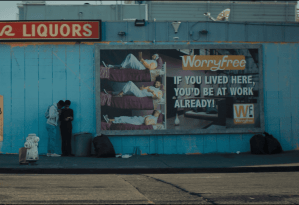
WorryFree is the primary antagonist of Sorry to Bother You, a satire about a Black man who becomes a telemarketer and finds great success when using his “white” voice. The company provides food and housing for employees in exchange for their labor, in addition to a number of shady dealings on the side. While Amazon hasn’t pulled a Mr. Beast and bought up housing for employees, their harsh quotas are about as close as you can get to milking as much labor out of employees as possible for as long as possible.
Futurama: MomCorp/Momazon
“You won’t find anything at all in my warehouse. Except every item in existence.” MomCorp is a massive online retailer that utilizes drones to deliver basically anything you could possibly imagine right to your front door. Sound familiar?
Staunchly anti-union, quickly replacing humans with robots, and requiring said robots to work 24/7, MomCorp bleeds out into other industries and has taken over most of them, including energy, delivery, and military production. It’s a pretty clear reference to Amazon, particularly the introduction of “Momazon” in the newer season.
Nestlé

Arguably one of the most evil corporations out there, Nestlé is one of those companies that manages to be on the wrong side of history every time without fail. Founded all the way back in 1866 as a baby food company, it’s now one of the biggest food and beverage manufacturers in the world (among other things, including bottled water, baby food, pet food, and more), boasting ownership of dozens of major brands. This makes it one of the more difficult brands to boycott, as even when you manage to avoid the blatantly Nestlé-branded products, there are tons of subsidiaries that don’t explicitly mention being owned by Nestlé at all.
(Personal anecdote: when I was first trying to boycott Nestlé, I decided to give up on Nesquik even though I absolutely love me some choccy milk. I found another chocolate milk powder that tasted similar: Ovaltine. I was very excited to get me some choccy milk guilt-free…until I looked it up out of curiosity and learned that Nestlé had acquired Ovaltine in 2007 and owns the rights to this day. Even when you win, you lose!)
If you’re wondering why Nestlé deserves a good ol’ fashioned boycott, the list is long. Some major hits include child slavery, the infamous and nefarious baby formula scandal (more on that below under the examples), extraction of water to bottle and resell—including in places suffering from drought, the then-CEO’s claim that “Access to water should not be a public right” in 2000, widespread deforestation in Africa (particularly for coffee and cocoa), hiring paramilitary death squads to murder a union employee in Colombia (allegedly, with investigations stalled, so it’s unlikely Nestlé will ever be held to account), and a more recent lawsuit involving misleading consumers over GMOs in their products.
(Update November 2025: I want to note that I was being slightly unfair with the above quote by then-CEO Brabeck-Letmathe. He never directly said, “Access to water is not a human right.” However, the sentiment was the same. His direct quote was:
“Water is, of course, the most important raw material we have today in the world. It’s a question of whether we should privatize the normal water supply for the population. And there are two different opinions on the matter. The one opinion, which I think is extreme, is represented by the NGOs, who bang on about declaring water a public right. That means that as a human being you should have a right to water. That’s an extreme solution. The other view says that water is a foodstuff like any other, and like any other foodstuff it should have a market value. Personally, I believe it’s better to give a foodstuff a value so that we’re all aware it has its price, and then that one should take specific measures for the part of the population that has no access to this water, and there are many different possibilities there.”
After the (rightful) backlash, the company tried to do some damage control by insisting that his stance on water being a marketable resource is actually beneficial, because it will make us all view it as the “precious” resource that it is. Whether you find that explanation sufficient or not is up to you.
It doesn’t change much, in my opinion, as he makes it clear that he views food and water purely as commodities, and the very concept of one of the most important resources to human survival being a human right as “extreme.” But I do want to be transparent and acknowledge that the previous quote was not accurate, and I apologize for the misinformation on that front.)
Fun fact: Remember how I said Nestlé always manages to be on the wrong side of history? Well, Nestlé, Amazon, and Walmart are all on the very long list of Israel-supporting companies, and while they are not on the BDS-approved list of companies to boycott, you certainly couldn’t be blamed for deciding that this (among other things) is a deal breaker and that you’d like to add Nestlé to your boycott list if it’s not on it already.
(Update June 2025: As I write this, Amazon is indeed now a target of BDS boycotts.)
Their crimes are so numerous and well-known that they frequently pop up in conversations about evil companies (ask me how I know!), and they’ve even taken to addressing a number of these scandals on their website. On it, they appear to obfuscate the impact of their “marketing practices” and pat themselves on the back for a resulting boycott being dropped in 1984, thanks to an updated policy and “improved practices” that they do not expand on.
Soylent Green: Soylent Corporation

Soylent Green is people. It’s water ostensibly made from plankton and meant to be a super healthy alternative to…regular water. Spoiler alert: it’s actually made from human bodies, and NYPD detective Robert Thorn ends the movie shouting to everyone who will listen that “Soylent Green is people!”
I know Nestlé doesn’t make its products with people (as far as we know), but I suppose it’s a useful metaphor for that one time Nestle offered free formula in Africa and misled consumers about its health benefits in the 1970s. They provided a supply of the formula just long enough for mothers to stop producing their own breast milk, causing millions of infants to die of malnutrition when the mothers could no longer afford the formula and had to resort to diluting it to preserve what little they had. Seriously. They even went so far as to hire sales staff dressed eerily similar to healthcare workers to visit mothers in maternity wards, giving their little scheme a professional edge to make their product look healthier and doctor-approved.
Nestlé is also what you might call a “leader” in the bottled water business. Meaning that they’ve made an entire industry off of paying to siphon what should be a free resource, bottling it up, and selling it back to residents at a nice profit. Remember the above: “The one opinion, which I think is extreme, is represented by the NGOs, who bang on about declaring water a public right. That means that as a human being you should have a right to water. That’s an extreme solution.”
If it wasn’t bad enough that the company preyed on mothers who were already lacking in resources and capitalized off of their desperation, they also made it so that, in many regions, only those who could afford their bottled water could have access to clean water at all. This exacerbated the mass death that they caused, as mothers who lacked access to breast milk or formula turned to diluting it with water, which, thanks in part to Nestlé, they often just…didn’t have. If the infants weren’t dying of malnutrition, they were instead dying of disease from the unclean drinking water that the victims of Nestle’s cruel, relentless profiteering were forced to use.
Charlie and the Chocolate Factory: Wonka Chocolate Factory

Willy Wonka uses the free labor of the Oompa-Loompas to run his famous chocolate factory.
It’s this very factory that is so dangerous that it risks the lives of several kids “lucky” enough to get a golden ticket and go on a tour of the place. But it’s the slave labor in particular that makes the Wonka Chocolate Factory a worthy metaphor for Nestlé, which has been sued repeatedly for the enslavement of children on cocoa farms. The court ruled in favor of Nestlé in 2021, with Justice Clarence Thomas acknowledging that the farms that enslaved African children and forced them to work 12-14 hour days with little food were indeed funded by Nestlé, but stated that “there was no evidence that business decisions made in the US led to the men’s forced labour.” So, hey. They may profit off of child slavery, but they’re not the ones who directly enslaved the children. They just paid the ones who did!
Wells Fargo
Wells Fargo is the world’s fifth-largest bank, boasting a $167 billion market cap. Yahoo Finance made my job very easy by creating a timeline of all the shenanigans this little bank has gotten up to over the years. One of their biggest scandals came in 2016 when they were hit with $185 million in fines by the Consumer Financial Protection Bureau for creating over 1.5 million fake accounts using the names of their customers. Then they got smacked again in civil court and had to cough up $3 billion.
In 2017, the bank was also sued for allegedly overcharging small retailers, charging “unauthorized fees” and “disguis[ing] the fees with deceptive language in monthly statements.” Wells Fargo has also been the target of lawsuits for discrimination against Black and Latino borrowers (unsurprisingly), specifically for mortgage pricing discrimination, the rate at which Black borrowers would receive pricing exceptions that banks occasionally request to lower their APR. As you might expect, Black and female borrowers were the recipients of the pricing exceptions less often, resulting in a mortgage probe that’s still ongoing.
The bank’s more recent oopsie-poopsies include blaming their failure to hire minority employees on a “limited pool of Black talent” in 2020 and becoming the target of a federal investigation after allegedly conducting fake interviews of minority candidates in 2022. Unfortunately, the company managed to dodge shareholder lawsuits due to a lack of adequate evidence that the false interviews took place.
Star Wars: InterGalactic Banking Clan

The InterGalactic Banking Clan is exactly what it sounds like: a commerce clan that does business throughout the galaxy, most prominently throughout the Clone Wars. They played both sides, though they hit the Republic with crazy high interest rates and called themselves a neutral party despite the clear bias.
This one’s a bit of a looser connection since as far as I know Wells Fargo has never done any wartime “play both sides” business, but I consider this a proper connection thanks to the banking giant’s tendency to discriminate against minority lenders, denying them loans at a higher rate, offering fewer pricing exceptions as mentioned above, “steer[ing] [Black and Hispanic borrowers] into subprime mortgages” and charging higher fees and rates than white borrowers. In short, they really like to take a dump on the little guy. Just like Wells Fargo!
Despicable Me: The Bank of Evil

The Bank of Evil from Despicable Me makes an appearance when Gru is seeking a loan so he can steal the moon. Don’t worry about the semantics of that sentence; we are just going to focus on the bank itself and the fact that it provides loans literally for the sake of doing evil, villainous things. Add to that the fact that Vector, the first movie’s primary antagonist, is able to secure a loan thanks to the fact that his father is Mr. Perkins, the president of the bank.
But Gru, a small-time villain with big dreams but not a whole lot of villainous feats to back him up, is immediately denied the loan. This feels like the villain version of Wells Fargo denying loans to certain candidates or charging smaller vendors at a higher rate, but my overall point is that Wells Fargo is a villain bank with predatory practices, so it makes sense to connect it to the literal Bank of Evil.
Monsanto/Bayer

Because Bayer acquired Monsanto in 2018, I’ll keep this simple and put the sins of both companies in the same place.
Pharmaceutical and biotechnology giants Monsanto and Bayer, founded in 1901 and 1863, respectively, both have their fair share of scandals. Bayer’s most notable controversy comes from 1997, when the pharmaceutical company “knowingly sold HIV-infected protein.” They did so not long after withdrawing them from the US and European markets, recalling them and reselling them to Asia and Latin America. The company has since paid out over $600 million in lawsuits connected to the scandal, and it stands by its so-called ethical practices to this day. I’m not sure how you can recall HIV-infected protein in the US and Europe, then go ahead and resume selling it in Asia and Latin America, knowing these products were infected and still call yourself ethical, but that’s Bayer for ya.
That’s one of the more well-known of Bayer’s scandals and shady practices, but there’s plenty more, including the development of chemical weapons, bribery, more cases of infected products or failures to disclose crucial health information, toxic pesticide dumps, and worker abuse, to name a few.
Monsanto, meanwhile, has had its own number of scandals, one of its biggest being its illegal use of pesticides and the continued use of said pesticides despite knowing the damage it could do to farms. The agricultural biotech company has had disputes with farmers for years, employing shady practices to keep tabs on and strike fear into them, and to this day, it’s not entirely known the damage the genetically modified seeds, pesticides, and milk production at the hands of Monsanto could have caused to farms…and to us.
Resident Evil: Umbrella Corporation

I think knowingly selling HIV-infected protein because you’d rather put the lives of thousands of people at risk rather than recall the tainted product and risk losing a profit makes Bayer a pretty good candidate for the “Hey, you’re kind of like the Umbrella Corporation from Resident Evil” award.
The Umbrella Corporation is similar to Bayer/Monsanto and Nestlé in that it’s got its hands in a lot of different industries. Its big bucks come from pharmaceuticals and the development of biological weaponry, however—another line to draw to Bayer/Monsanto.
It’s the Umbrella Corporation that was responsible for the T-virus that mutated humans into zombie-like monstrosities. This makes it a perfect connection to Bayer/Monsanto, which developed explosives as well as chlorine and mustard gas in the WW1 era.
Alien: Weyland-Yutani Corporation

Weyland-Yutani is yet another one of those massive conglomerates that own pretty much everything. In Alien, they send our intrepid heroes after the deadly Xenomorphs in the hopes of making a nice profit off of Xenomorph bioweaponry. Sure, as far as I know, they don’t develop chemical weapons the way Bayer did, but I’d say sacrificing your staff and potentially all of humanity in a quest to capture dangerous alien predators and utilize them for warfare is a pretty good dystopian connection to make to a company (or, in this case, companies, plural) that has consistently prioritized profit over the health and well-being of humanity.
Whether it’s developing chemical weapons to be used in war or developing pesticides and/or genetically modified seeds that ultimately damage crucial food sources, the result is the same: humanity suffers, while a massive corporation makes a killing.
Sources
- “Attorney General Josh Shapiro Announces Settlement with Walmart over Opioid Epidemic Allegations.” Pennsylvania Office of Attorney General, http://www.attorneygeneral.gov/taking-action/attorney-general-josh-shapiro-announces-settlement-with-walmart-over-opioid-epidemic-allegations/. Accessed 18 Nov. 2023.
- Aubin, Dena. Wells Fargo Joint Venture Sued over Merchant Credit Card Fees, http://www.reuters.com/article/us-wellsfargo-merchants-idUSKBN1AN1ZY. Accessed 25 Dec. 2023.
-
BBC NEWS. “US Supreme Court Blocks Child Slavery Lawsuit against Chocolate Firms.” BBC News, 18 June 2021, http://www.bbc.com/news/world-us-canada-57522186.
- Berg, N. (2012) Radiating Death: How walmart displaces nearby small businesses – bloomberg, Bloomberg. Available at: https://www.bloomberg.com/news/articles/2012-09-14/radiating-death-how-walmart-displaces-nearby-small-businesses (Accessed: 27 August 2025).
- Barker, Holly. “Walmart Workers’ $35 Million Wage Statement Deal Wins Final Nod.” Bloomberg Law, 8 Dec. 2022, news.bloomberglaw.com/litigation/walmart-workers-35-million-wage-statement-deal-wins-final-nod.
- Barlett, Donald L., and James B. Steele. “Monsanto’s Cruel, and Dangerous, Monopolization on American Farming.” Vanity Fair, 2 Apr. 2008, http://www.vanityfair.com/news/2008/05/monsanto200805.
- “Bayer Division ‘knowingly Sold’ HIV-Infected Protein.” The Guardian, Guardian News and Media, 23 May 2003, http://www.theguardian.com/world/2003/may/23/aids.suzannegoldenberg.
- Berr, Jonathan. “Nestle Misled Consumers about Gmos in Its Food Products. Lawsuit Alleges.” CBS News, CBS Interactive, 2 Aug. 2018, http://www.cbsnews.com/news/nestle-misled-consumers-about-gmos-in-food-products-lawsuit-alleges/.
- “Comprehensive EEOC, Wal-Mart Settlement Resolves Disability Lawsuit.” US EEOC, http://www.eeoc.gov/newsroom/comprehensive-eeoc-wal-mart-settlement-resolves-disability-lawsuit. Accessed 18 Nov. 2023.
- Department of Justice. “Walmart Inc. And Brazil-Based Subsidiary Agree to Pay $137 Million to Resolve Foreign Corrupt Practices Act Case.” Justice.gov, 20 June 2019, http://www.justice.gov/opa/pr/walmart-inc-and-brazil-based-subsidiary-agree-pay-137-million-resolve-foreign-corrupt.
- Gillam, Carey. “Revealed: Monsanto Predicted Crop System Would Damage Us Farms.” The Guardian, Guardian News and Media, 30 Mar. 2020, http://www.theguardian.com/us-news/2020/mar/30/monsanto-crop-system-damage-us-farms-documents.
- Hamilton, K. (2023, May 30). Delivery drivers sue amazon for being forced to pee in bottles. Forbes. https://www.forbes.com/sites/katherinehamilton/2023/05/24/delivery-drivers-sue-amazon-for-being-forced-to-pee-in-bottles/?sh=28c419ff333a
- “Justice Department Reaches Settlement with Wells Fargo Resulting in More than $175 Million in Relief for Homeowners to Resolve Fair Lending Claims.” Office of Public Affairs | Justice Department Reaches Settlement with Wells Fargo Resulting in More Than $175 Million in Relief for Homeowners to Resolve Fair Lending Claims | United States Department of Justice, 9 June 2023, http://www.justice.gov/opa/pr/justice-department-reaches-settlement-wells-fargo-resulting-more-175-million-relief.
- Krasny, Jill. “Every Parent Should Know the Scandalous History of Infant Formula.” Business Insider, Business Insider, http://www.businessinsider.com/nestles-infant-formula-scandal-2012-6#millions-of-babies-died-from-malnutrition-9. Accessed 22 Dec. 2023.
-
McCarthy, A. (2023) Exxon scientists predicted global warming with ‘shocking skill and accuracy,’ Harvard researchers say, Harvard Gazette. Available at: https://news.harvard.edu/gazette/story/2023/01/harvard-led-analysis-finds-exxonmobil-internal-research-accurately-predicted-climate-change/.
- “Nestle under Fire – DW – 08/27/2012.” Dw.Com, Deutsche Welle, 27 Aug. 2012, http://www.dw.com/en/nestle-under-fire-over-colombian-murder/a-16195009.
-
Ovaltine | History | The Himmel Group (2017) thehimmelgroup-copy. Available at: https://www.himmelgroup.com/ovaltine (Accessed: 27 August 2025).
- Pierce, Mark. “Everything Owned by Nestlé.” Wyoming Trust & LLC Attorney – Asset Protection Is Our Only Focus, Cloud Peak Law Group, P.C., 29 Sept. 2023, wyomingllcattorney.com/Blog/Everything-Owned-by-Nestle.
- Resilience. “Oil Companies and the Windfalls of War.” Resilience, 14 Mar. 2023, http://www.resilience.org/stories/2023-02-03/oil-companies-and-the-windfalls-of-war/.
- “Revealed: Exxon Made ‘breathtakingly’ Accurate Climate Predictions in 1970s and 80s.” The Guardian, Guardian News and Media, 12 Jan. 2023, http://www.theguardian.com/business/2023/jan/12/exxon-climate-change-global-warming-research.
- Ritchie, J. N. & A., & Staff in the Office of Technology and the Bureau of Competition. (2023, December 5). FTC sues Amazon for illegally maintaining monopoly power. Federal Trade Commission. https://www.ftc.gov/news-events/news/press-releases/2023/09/ftc-sues-amazon-illegally-maintaining-monopoly-powe
- Solomon, Stephen. “The Controversy over Infant Formula.” The New York Times, The New York Times, 6 Dec. 1981, http://www.nytimes.com/1981/12/06/magazine/the-controversy-over-infant-formula.html.
- Son, Hugh. “Regulators Caught Wells Fargo, Other Banks in Probe over Mortgage Pricing Discrimination.” CNBC, CNBC, 11 Dec. 2023, http://www.cnbc.com/2023/12/11/wells-fargo-mortgage-lenders-probed-over-racial-discrimination.html.
- Walmart inks $14m deal to end pregnancy bias class action. Law360. (n.d.). https://www.law360.com/articles/1209869/walmart-inks-14m-deal-to-end-pregnancy-bias-class-action
- Wolff-Mann, Ethan. “Wells Fargo Scandals: The Complete List.” Yahoo! Finance, Yahoo!, 12 Mar. 2019, finance.yahoo.com/news/wells-fargo-scandals-the-complete-timeline-141213414.html.
